
“My family struggled, but my children won't”: How India's youth are creating their own economic opportunities
India · · 8 min
Despite their families working in agriculture for generations, many Indian youth are pushing back against these expectations, pursuing formal work. To respond to shifting needs, the Yuva Junction programme sparks employment and entrepreneurship opportunities amongst vulnerable populations in overlooked regions.

Many youth whose families have farmed for generations want to develop the life and career skills needed to secure jobs in other trades.
AKDN / Mansi Midha
One of Arvind Kanat’s lowest moments was losing his job during India’s COVID-19 pandemic lockdowns.
“I didn’t know what to do,” says the 31-year-old artist. “I lost everything.”
At the time, Kanat worked as an art teacher at a private school in the country’s Surat district. After becoming unemployed, he traveled 120 kilometres to his hometown Dhangdi, located in Gujarat state, near the western coast of India.
Dhangdi, a village of 500 people, is covered by a dense forest and is part of the country’s tribal belt, where economic and other opportunities are limited.
Kanat, who moved back in with his parents, brother, sister-in-law and their child, says the family – who works in agriculture – survived the pandemic by living off their land but struggled to make ends meet.
After a year of unemployment, Kanat found a job at a bamboo art craft business. Over the coming months, he learned the ins and outs of running a small enterprise, from product design to operating machinery.
“I thought to myself: I have a lot of skills with painting and bamboo products. I can start my own enterprise.”

The success of Kanat’s business has made him confident about his family’s future and his children completing their education.
Knowing he needed support, Kanat reached out to the Aga Khan Rural Support Programme (AKRSP-India), which he knew helped other entrepreneurs in his village – including his employer – get their businesses off the ground.
Soon after, he enrolled in AKRSP-India’s Yuva (youth in Hindi) Junction programme, where he received entrepreneurship training and seed funding to launch his business, AK Painter and Bamboo Art.
The small enterprise produces bamboo products, including mobile stands and toys, and sells Kanat’s paintings. In one year of operation, Kanat has more than doubled his earnings from when he was an art teacher and hired four employees, with plans to employ another four this year.
“Youth from my village usually migrate to big cities and do manual labour. It’s dangerous, and they get into accidents,” he shares. “Now these youth I employ earn good money and are happy to have jobs in the village.”
The success of Kanat’s business means he no longer lives month-to-month. Not only does he financially support his family, but Kanat has multiple savings accounts for future needs.
“I used to have a lot of stress with regard to money, but now I’m confident. My family struggled financially, which is why I never completed my education, but this will not be the case for my future children and my brother's children.”

Kanat crafting a product alongside one of his employees, a youth from his village happy to earn good money doing skilled work.

From agriculture to enterprise and skills development
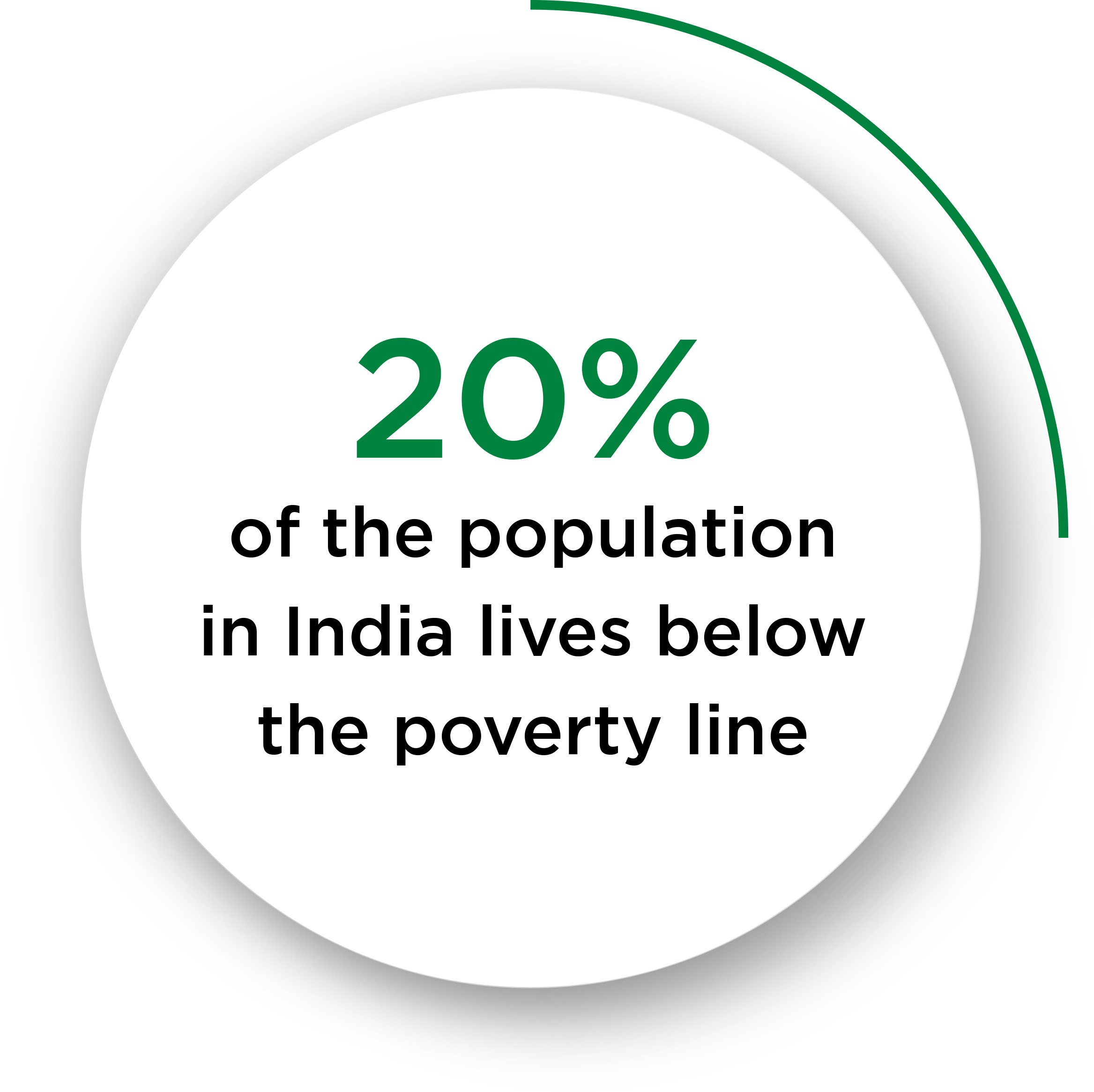
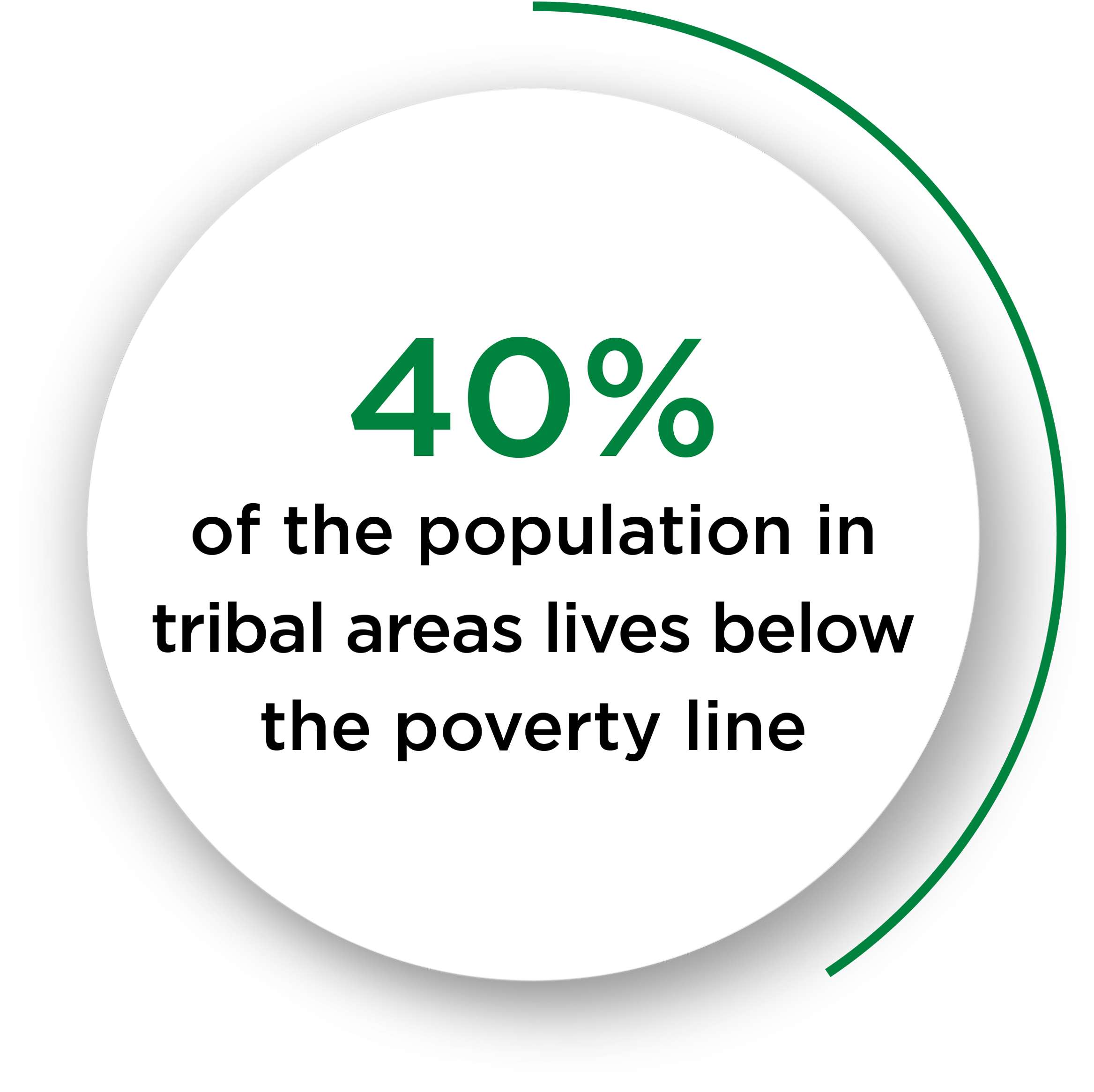
India’s tribal belt, predominantly covering nine states in the country’s eastern, central and western belt, is home to hundreds of tribes who are amongst the country’s most vulnerable and marginalised. While 20 percent of India’s population lives below the poverty line, this figure is 40 percent in tribal areas.
Families in India’s tribal belt have engaged in agricultural work for generations. However, this is changing because of increased education levels and Internet connectivity and decreased agricultural earnings because of variable rainfall, droughts and cyclones due to climate change.
AKRSP-India, which has been working in the country’s tribal areas since 1985, had a front-row seat to the changing career aspirations of youth.


“We found that hardly any youth were turning up in our meetings because they were just not interested in agriculture or livestock,” says Naveen Patidar, CEO of AKRSP-India.
Yet, when looking at livelihood programmes offered by the government, civil society groups and the private sector, they all centred around agriculture, Patidar says – excluding youth who desire to earn a livelihood through formal employment.
To cater to these shifting needs, AKRSP-India expanded its focus. In 2007, it launched Yuva Junction to support youth between 18 and 35 through entrepreneurship and skills development.
In addition to supporting youth like Kanat to realise their entrepreneurial dreams, Yuva Junction operates 28 youth centres in rural locations across 10 districts in Gujarat and Bihar. The centres provide English and IT literacy training and offer life and career skills needed to work in trades, including retail, hospitality, computer hardware, beauty and wellness, and sewing. Upon completing the programme, Yuva Junction links youth with employers who need their skillsets.

English language classes help participants become more employable in the formal workforce.

From small towns to big cities
When Khyali Devaliya, 20, began looking for a job, she thought of a young woman in her hometown of Talala in India’s Gujarat state who participated in a skills and employment programme. Not only did the programme land her a job, but Devaliya noticed an intriguing difference in the woman’s confidence.

Devaliya, who comes from a family of farmers, inquired about the programme – Yuva Junction – and enrolled, hoping to secure formal employment.
“Finding a job is tough,” Devaliya says. “You need particular skills and experience and a network.”
According to the World Bank, 24 percent of youth in India – or nearly one in every four – are unemployed, which is triple the country’s overall unemployment rate of eight percent. This figure also doesn’t capture the tens of millions who are in precarious and underpaid work, like many of Devaliya’s friends.
After participating in Yuva Junction’s three-month training programme and being connected to potential employers, Devaliya landed a job as a cashier in a big-box department store. Five months into her job, she is outearning her parents.

Many youth whose families have farmed for generations want to develop the life and career skills needed to secure jobs in other trades.
“My dad is especially proud of me. He is confident that I’m just starting out and will learn more and earn more in the future.”
But joining the workforce wasn’t an easy adjustment, particularly as Devaliya had to relocate.
“Both of my parents were not ready to let me move. I had to convince them,” Devaliya says. “They were afraid because it’s a big city, far away from them. How would I manage alone? Where would I live? How would I commute to work? I was also a bit afraid,” she admits.
Sure enough, Devaliya struggled with homesickness as she adjusted to city life.
“It was very difficult – the new job, relocating and being alone. It was all overwhelming.”
To counteract this, Yuva Junction set up housing centres for young women to live together while receiving support from counselors and placement officers. Over five years, these centres increased the retention rate of women in the employment programme from 30 percent to 80 percent.

Devaliya, who periodically visits her family on weekends, is better adjusted to city life and plans to explore further educational opportunities to widen her job prospects.
Scaling livelihood programmes to amplify impact
Training in leadership, communication, conflict resolution and in other areas – such as what Yuva Junction offers – is essential not only to obtain a job, but to retain it too, according to Andrew Baird, CEO of Education for Employment, an organisation addressing the youth unemployment crisis in the Middle East and North Africa.
“Hard skills get you hired, [poor] soft skills get you fired,” Baird says, quoting a common adage. “[Providing skills training is] a huge win for the youth themselves, but also for the business case for investing in this kind of training since [trained youth] get promoted more quickly and their salaries increase at a higher rate.”
Since 2007, the Aga Khan Foundation has trained more than 35,000 youth in India on digital skills. AKRSP-India’s market-driven approach has supported 7,500 young women and men with employability skills training since 2012, most of whom have secured employment with a starting salary of $1,200 to $1,500.

“This is a huge jump,” Patidar says. “It might look small, but if you look at the traditional income from agriculture, which their families are in or their parents are earning, these youth are earning double or triple the annual income of their parents.”
More than 1,500 entrepreneurs – 80 percent of whom are from tribal areas – have participated in Yuva Junction’s entrepreneurship stream since 2016. The programme is rapidly scaling and currently supports more than 750 participants annually. Still, it’s the unique demographic of participants that makes it special, says Mike Bowles, Global Advisor on work and enterprise at the Aga Khan Foundation.
“In a way, nobody else is going out into the rural places and has the platform that the agricultural support programme has to engage communities from the front end to bring them all the way to the job market,” he says.
This is possible because of AKRSP-India’s decades-long history of working with vulnerable communities. In addition to being from rural and tribal areas, 80 percent of participants in Yuva Junction have not completed secondary school, primarily due to poverty, and would be considered dropouts. This is a significant factor impeding their job prospects, Bowles explains.
“The longer it takes to get a job as a young person, it can have an impact even decades into the future,” he says.
Baird echoes this, saying a delay in joining the workforce has an exponential impact on career trajectories and earning potential over a lifetime. This is the reality for tens of millions of unemployed youth globally, including in countries where the Aga Khan Development Network is supporting young people to find and create employment opportunities.
This is particularly true for young women, who, if they cannot secure decent work, have increased chances of getting married and leaving the labour force forever, Bowles explains.
But some women, like Devaliya, say these pressures don’t limit their ambition.
“Every girl should think about her future career and want the best for herself,” Devaliya says.
And she’s leading by example.
Jacky Habib is a Nairobi-based freelance journalist reporting about social justice, gender and humanitarian issues. She has been published by NPR, CBC, Al Jazeera, VICE, Toronto Star and others.