
Why pluralism is more important than ever
· 10 min
Opinion
By Meredith Preston McGhie, Secretary General, Global Centre for Pluralism – an initiative founded in partnership with the Government of Canada
- Pluralism is a practical, active choice that transforms diversity from a challenge into a source of strength and shared prosperity.
- Inclusive societies that embrace pluralism innovate, reduce conflict and unlock the full potential of all their members.
- Governments and communities must commit to pluralism as an ongoing process to build safer, more just and thriving societies.
In an era marked by division and fear, pluralism offers hope – not as wishful thinking, but as a practical, proven framework for unity, resilience and prosperity. It is the belief that our differences, rather than dividing us, can be the very source of our collective strength.
Pluralism turns aspiration into action. When we engage constructively across differences, we solve complex problems more effectively and societies thrive. Reaching out to marginalised youth reduces the lure of radicalisation; building inclusive immigration systems ensures newcomers and host communities succeed together.
A powerful example is Canada’s resettlement of Ugandan Asians in the 1970s, when thousands were expelled under Idi Amin. Among them, the Ismaili community – supported by a blend of government and private sponsorship – integrated rapidly, contributing to Canada’s economy, civic life and multicultural fabric. Their experience helped shape Canada’s Private Sponsorship of Refugees Program, now a global model, proving diversity and prosperity go hand in hand.
Yet polarisation and misinformation challenge pluralism today. The rise of divisive rhetoric and echo chambers threatens to erode trust in institutions and one another. In this climate, pluralism is not just an ideal – it is an urgent necessity.

24 November 1972: Asians expelled from Uganda at Schiphol.
Bert Verhoeff and Dutch National Archives
Pluralism is an active choice
Diversity exists in every society – whether in language, ethnicity, religion, geography, or worldview – but pluralism is not passive diversity. It’s an active choice to engage differences constructively, solve problems and build shared futures. Whether through municipal cultural celebrations or collaborations in sports and arts, pluralism transforms differences into bridges, preventing conflict and fostering mutual understanding.
This work is not easy. No society is immune to the tensions that differing views and needs can produce. Compounding this, scarcity mindsets – the belief that rights, resources and opportunities are finite – fuel exclusion. Yet history shows that securing rights for marginalised groups often benefits everyone. The disability rights movement, for instance, gave us ramps and closed captions, aiding not only people with disabilities but also parents, workers and the elderly.
History shows that securing rights for marginalised groups often benefits everyone.
Canada’s multicultural experiment reveals both the promise and tensions of pluralism. While inclusive policies have spurred cohesion and growth, they are not a panacea. Pluralism is not "in Canada’s DNA" – it is a muscle that must be exercised. It demands shifting perspectives: seeing differences not as threats but assets. Only by promoting dialogue, rejecting binaries and fostering inclusive institutions can pluralism become the foundation for our collective survival.

Pluralism demands that we see differences as assets, not threats.
Economies thrive under a pluralist approach
Pluralism is not just ethical – it is economic. Diverse societies innovate, adapt and thrive. Immigrants fill labour gaps, boost spending and drive industries from tech to agriculture. Research confirms this: ethnocultural diversity increases productivity and revenue. A 2017 study found a 1 percent rise in diversity correlates with a 2.4 percent revenue increase and 0.5 percent productivity gain. Companies embracing diversity outperform in creativity, risk management and profitability.
Pluralism also strengthens economies by advancing equity. Systemic barriers limit growth by excluding talent. Kenya’s struggle with minority access to citizenship documents – denying jobs, health care and education – shows how exclusion stifles economies. Organisations like Namati Kenya, a Global Pluralism Award laureate, work to dismantle these barriers, unlocking national potential.
Pluralism as an antidote to radicalisation
Radicalisation often stems from exclusion. When people feel alienated, extremist narratives exploit their vulnerability. Pluralism counters this by fostering belonging through community dialogues, interfaith programmes and cultural exchanges. Real dialogue – listening without demanding agreement – reveals the unmet needs driving extremism, such as identity and belonging.
Pluralism isn’t in our DNA – it’s a muscle that must be exercised.
A striking example is MARCH Lebanon, led by Lea Baroudi, which demonstrates the power of dialogue in countering radicalisation. Lea’s work in peacebuilding and conflict resolution with former fighters from the once-warring communities of Jabal Mohsen and Beb El Tebbeneh shows that pluralist approaches can resolve seemingly intractable conflicts. MARCH’s Theatre for Reconciliation programme used the performing arts to unite youth from opposing sides, notably in Tripoli, Beirut and Akkar.
The production Love and War on the Rooftop brought together young men who had never spoken to each other – only seeing the other as the enemy. Through the creative process, they discovered their shared humanity. As Lea explained, when they finally spoke, they found what united them rather than what divided them.

Lea Baroudi used theatre production to unite youth from opposing sides in Tripoli, Beirut and Akkar.
Global Centre for Pluralism
Pluralism cannot thrive in isolation
As Lea Baroudi’s work shows, pluralism requires connection. Despite digital connectivity, we are increasingly fragmented. Fear of cultural division tempts us to minimise differences, but pluralism urges us to embrace them while forging shared citizenship. In Canada, this happens daily – communities celebrating together, inviting all to participate in festivals that honour their heritage. In Ottawa, an extensive calendar of festivals – Polish, Brazilian, Indigenous, Turkish and Mexican, to name a few – makes the city a microcosm of Canada’s pluralist spirit.
Governing diverse societies requires balancing competing interests. Critics warn of a "tyranny of the minority", where small, organised groups influence decisions at the expense of the broader population. Conversely, a “tyranny of the majority” risks majority rule oppressing minority rights. The antidote is transparent decision-making, dialogue and compromising to mitigate tensions. Another tool is self-determination – empowering groups within larger states to address grievances before they escalate.
Rather than fearing that differences create hierarchies among groups, pluralism insists no group should impose its beliefs or ways of life to the detriment of others. This framework is key if governments are to prevent conflict and help diverse societies flourish.
A call to action
From countering radicalisation to driving growth, pluralism addresses some of our era’s greatest challenges. The path is difficult but essential. By committing to our shared humanity and embracing differences, we build societies that are safer, more prosperous and more just. Pluralism is not just a vision – it is a promise we must all work to fulfil.
Once we take time to listen to another who we see as different from ourselves, and we start to understand their story, we may find we have more in common than we thought and our conception of ‘we’ begins to expand.
His Highness the Aga Khan, in his message at the 2025 Global Pluralism Award ceremony
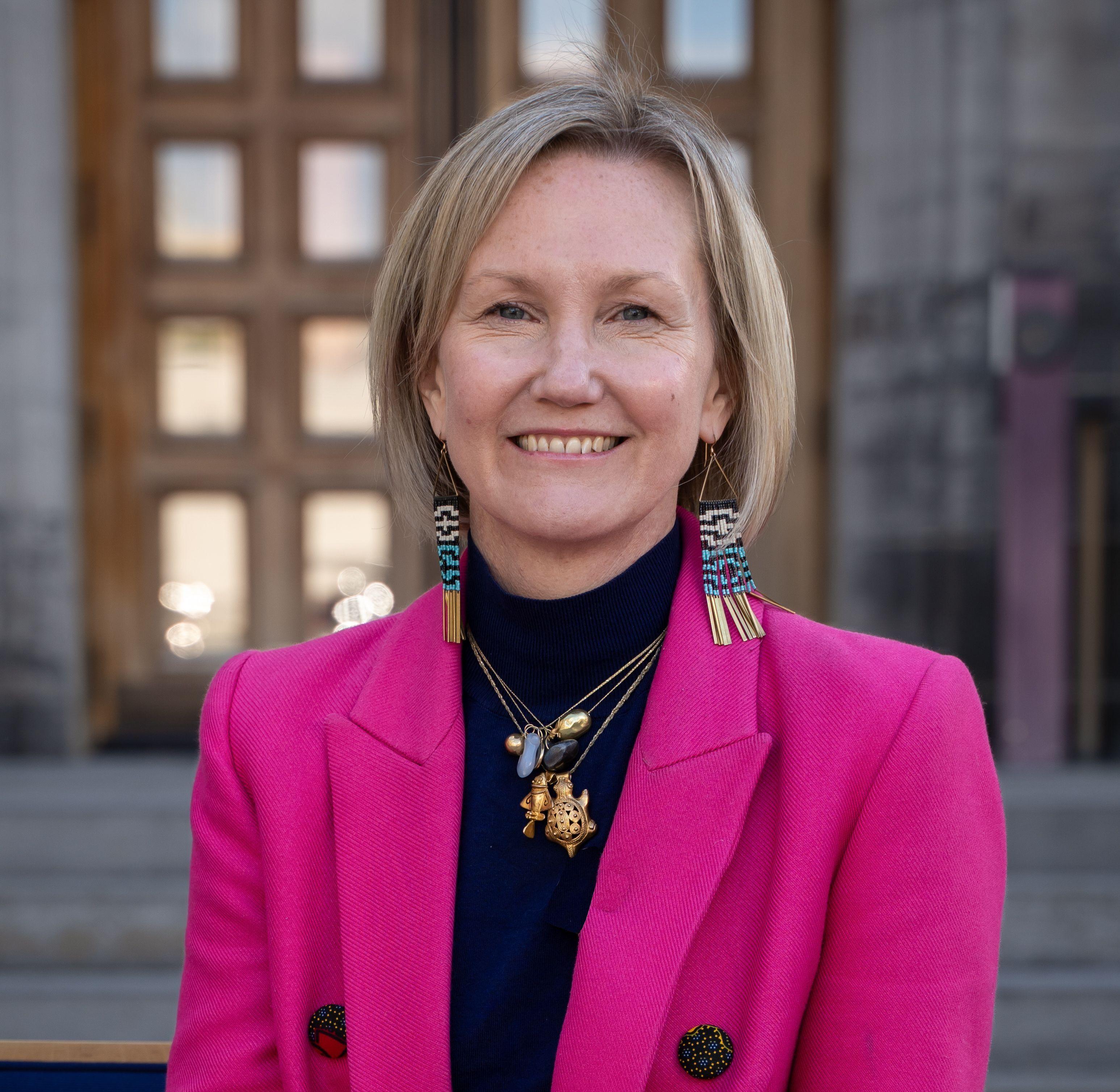
Meredith Preston McGhie
Meredith Preston McGhie is Secretary General of the Global Centre for Pluralism, leading its strategic vision and global partnerships. With over 20 years in conflict resolution and diplomacy, she has worked across Africa and Asia, advising peace processes in Kenya and supporting UN missions in Kosovo and Northern Iraq. Formerly Africa Regional Director at the Centre for Humanitarian Dialogue, Meredith is a recognized expert on pluralism and peacebuilding, recently sharing insights in a TEDx Talk.
